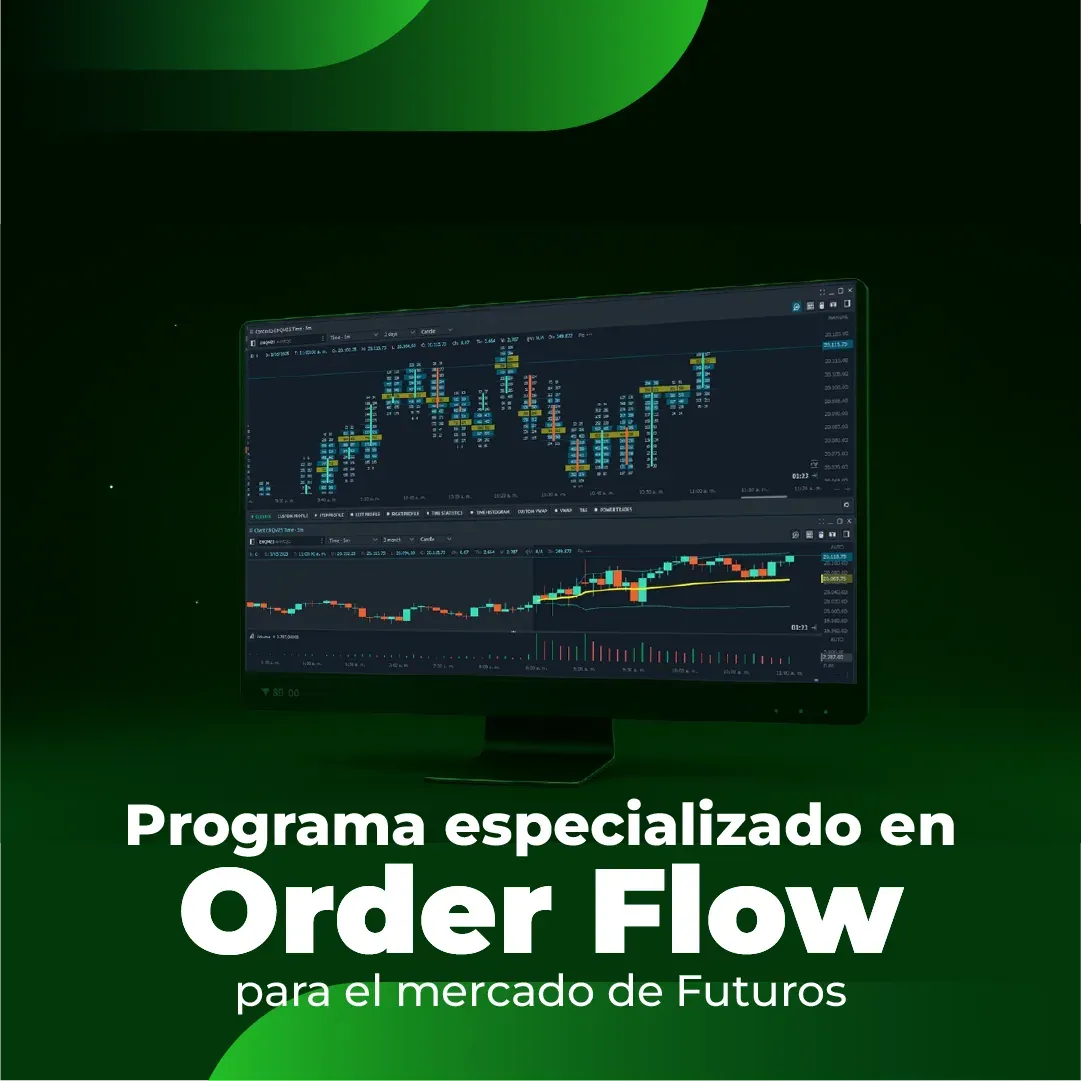
CME FUTURES MARKET PROGRAM
Master the futures market and trade with strategy on the CME.
Price
Student price
COP 2,000,000
For students with verification. Ask an advisor how to prove it.
LEARN TO TRADE ON THE CHICAGO MERCANTILE EXCHANGE.
THE EXCHANGE IN YOUR HANDS!
Get to know the futures market
It is a financial market where contracts are bought and sold to exchange assets at a future date at an agreed price. It is used to speculate or to protect against price changes. It is one of the most liquid, regulated and professional markets in the world.


Train by trading
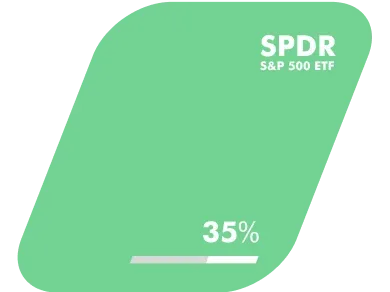
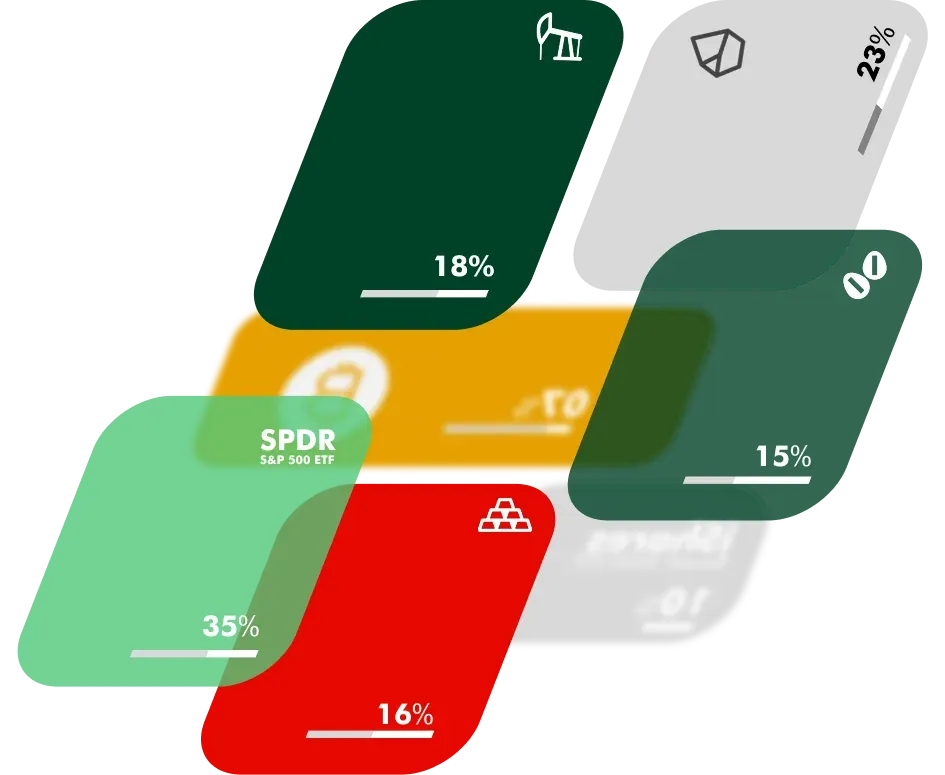
Train to trade futures contracts on the Chicago exchange (CME), covering the most liquid and relevant markets in the world: stock indices such as the S&P 500 and the Nasdaq 100, and commodities such as oil, gold and other high-turnover assets
You trade with a firm’s capital
Companies with large funds are looking for trained traders: they put up the capital, you bring the strategy.
It’s your next logical step
After the simulator, a funded account is the best bridge between training and the real market with your own capital (if you decide so).
You enter the real world of trading
You work under rules similar to those of a professional firm: risk management, clear goals and trading discipline.
Advantages of learning the futures market with Hyperion Capital
Learn with a proven strategy
We teach you our own methodology to trade futures with technical analysis, fundamental analysis and risk management. Proven, structured and designed for real traders.
From theory to the simulator
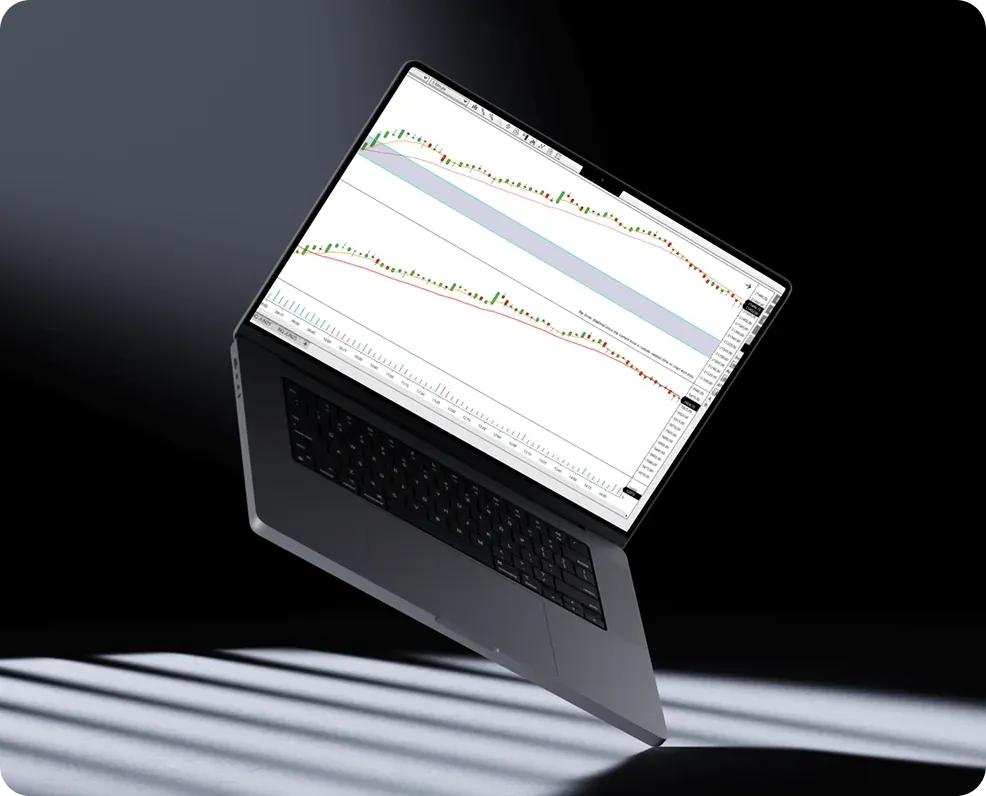
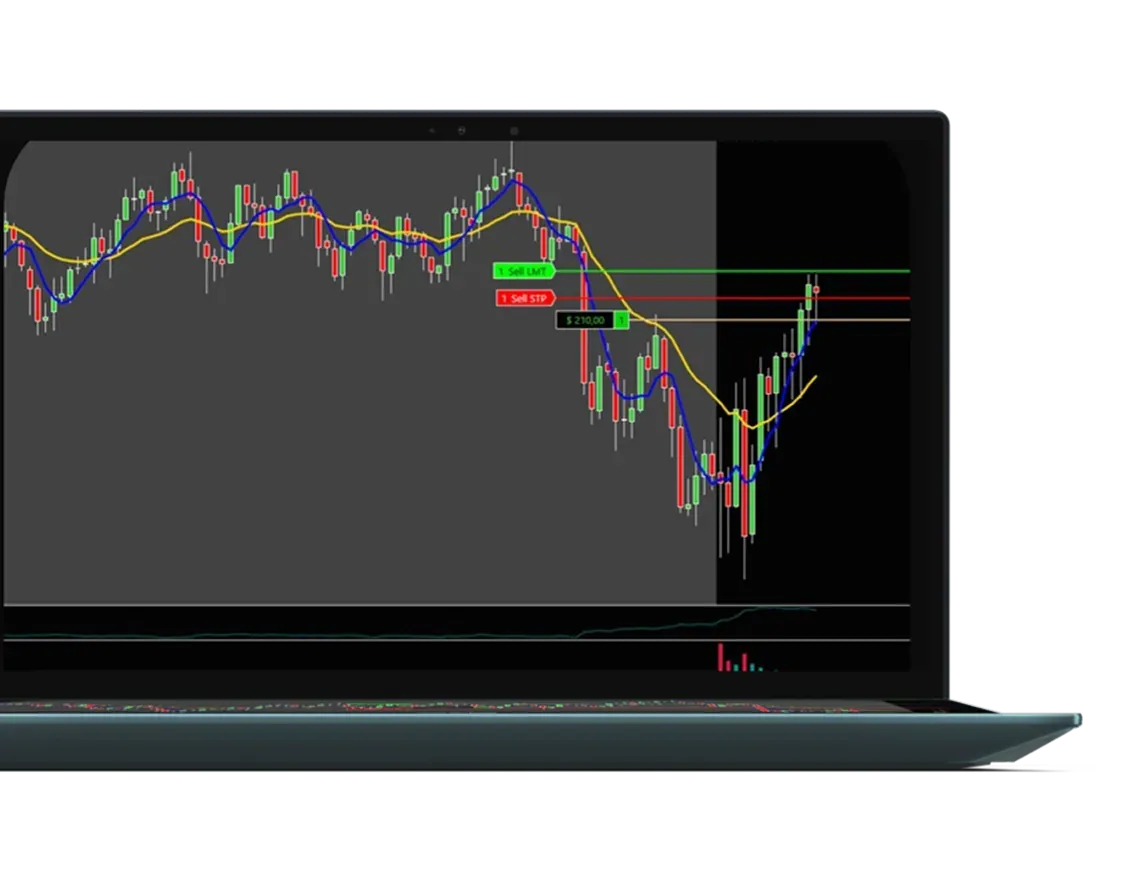
You go beyond analysis: you train reading volume and market structure, and you execute with judgment. You practice with real assets in a safe environment.
WHAT YOU WILL LEARN IN OUR PROGRAM
Technical analysis, participants and fundamentals of the futures market.
Main products offered on the CME GROUP, CME, CBOT, COMEX and NYMEX exchanges.
Create and structure your own trading plan.
Analysis on professional trading platforms.

TAKE THE FIRST STEP!
Description
In the program we will come to understand the futures market, taking part in the Chicago Mercantile Exchange (CME Group), the largest derivatives exchange in the world. You will also develop the skills needed to trade dynamically and strategically, whether on live or funded accounts.
Explore our curriculum
- Introduction to the Futures Market
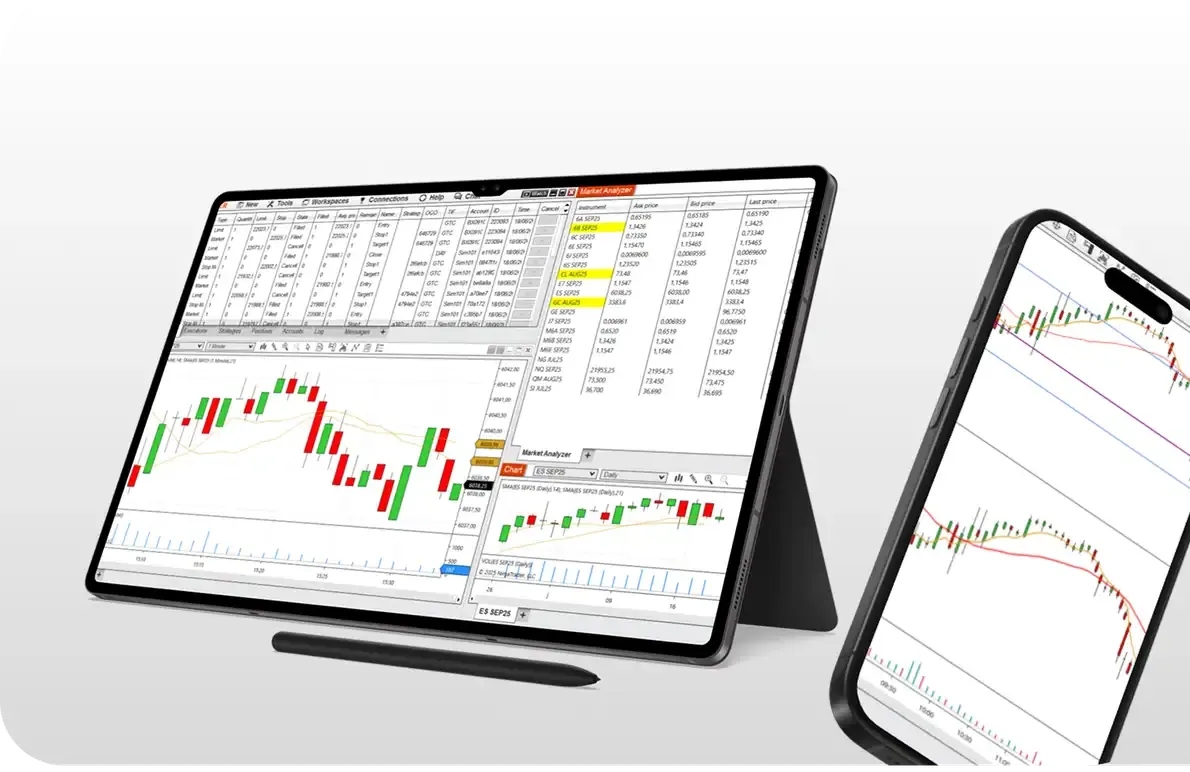
- Downloading and Using the NinjaTrader 8 Platform
- Intent Volume and Pending Orders.
- Strategy
- Trading with a Strategy
- Wyckoff Trend Continuation Volume
- Trading with Wyckoff Continuation Volume
- Trading Plan
- Risk Management
- Trading Psychology
- Funded Accounts
- Consolidation of terms and wrap-up.
Introduction to the Futures Market
- Definition and fundamental principles of the futures market.
- History and evolution of futures derivative instruments.
- Key characteristics and composition of products in the futures market.
- Use of trading platforms specialized in futures.
- Products traded on the main futures exchanges (CME, EUREX, ICE, COINBASE).
- Overview of the financial products available in the futures market.
- Financial futures: stock indices, interest rates, currencies.
- Commodity futures: energy, agriculture, metals.
Technical Analysis in the Futures Market
- Key factors that determine the price of a futures contract.
- Practical application of Wyckoff Theory in trading decisions.
- Statistical analysis and its relationship with trading volume.
- Calculation of settlement price and initial margin.
- Use of charts and technical tools to analyze futures.
- Identifying trends and price patterns.
- Application of advanced technical indicators in futures trading.
Trading Plan
- Definition and essential elements of an effective trading plan.
- Design and construction of a trading plan specific to trading in the futures market.
- Execution and monitoring of the trading plan, adjusting it to changing market conditions.
Risk Management and Trading Psychology
-
Fundamental principles of risk management in futures trading.
-
Use of stop-loss and limit orders to protect capital.
-
Strategies to balance risk and reward effectively.
-
Emotional and psychological factors that affect trading performance.
-
Developing discipline and emotional control to make rational decisions.
-
Techniques to manage stress and pressure in the futures markets.
-
Broker regulations and rules.
-
Types of regulatory bodies and their impact on trading.
-
Interpreting financial news and its effect on the markets.
-
Monitoring and tracking of trading accounts.